
Why We Compare Ourselves to Others and How It Quietly Drains Our Inner Wealth
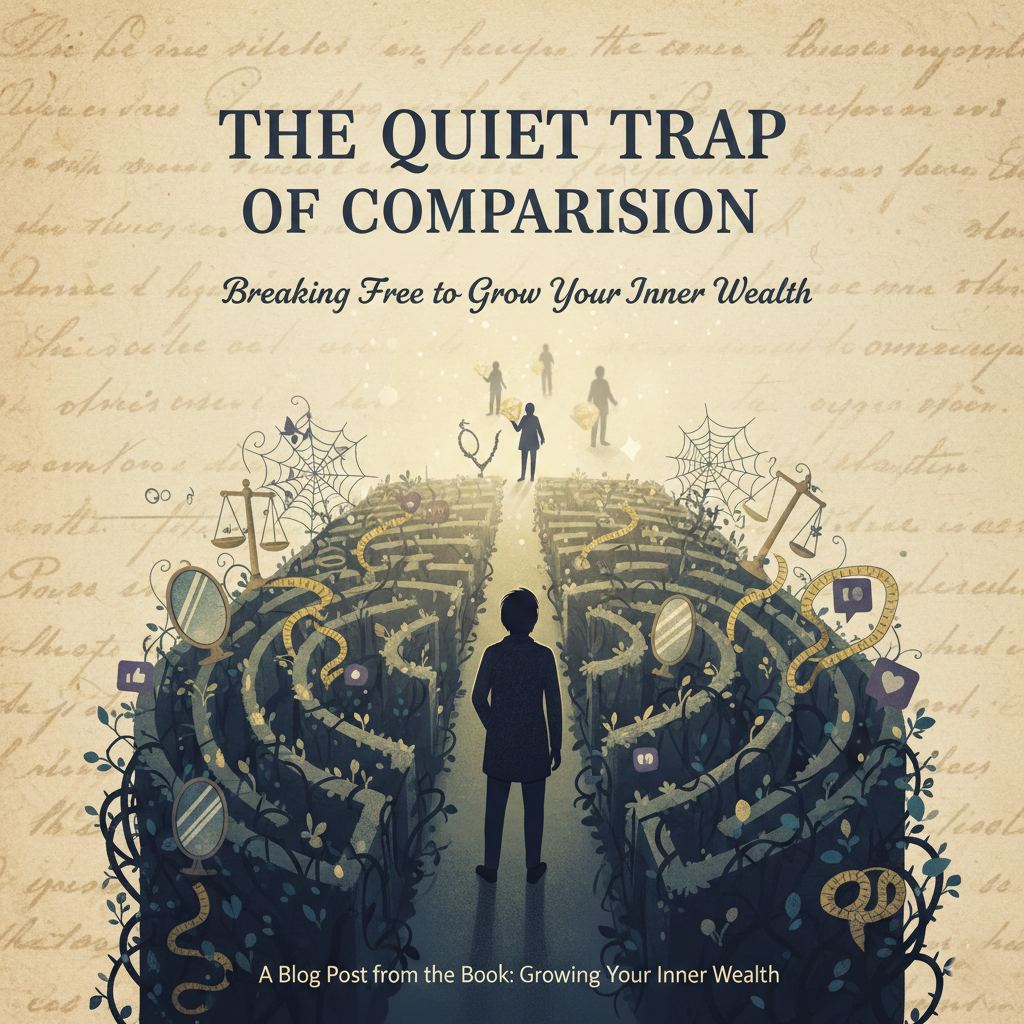
There’s a familiar moment many of us experience.
You’re working steadily. Making progress. Then you see someone else’s update which can be a promotion, a new home, a bold move paying off. You’re genuinely happy for them. And yet, almost instinctively, you start measuring yourself.
That instinct has a name.
In 1954, social psychologist Leon Festinger introduced social comparison theory. He suggested that when clear, objective measures are missing, as they usually are in life, we evaluate ourselves by looking at others.
Over time, researchers expanded this idea. Social comparison isn’t limited to skills or opinions anymore. It extends to status, success, emotions, lifestyle and self-worth especially in a world shaped by social media.
What is social comparison theory?
At its core, social comparison theory explains why we look sideways to understand how we’re doing.
Research shows:
Upward comparison (comparing with people perceived as “ahead”) can inspire growth—or quietly fuel dissatisfaction.
Downward comparison can offer comfort—but sometimes leads to complacency or unease.
Digital platforms amplify comparison by giving us constant access to curated highlights, not full stories.
In other words, comparison isn’t inherently harmful. But it becomes costly when it replaces our internal yardstick.
How comparison shows up in everyday life
Comparison rarely arrives loudly.
It shows up as a low-grade mental hum:
Am I moving fast enough?
Did I choose the right path?
Why does their progress look cleaner than mine?
The more often this happens, the more attention shifts outward—and away from your own priorities, pace, and values.
You stop noticing:
The small progress only you can see,
The rhythm that fits your life,
The quiet competencies you’ve built over time.
Gradually, worth starts being measured by someone else’s milestones.
Why comparison is intensified by social media
Comparison on social media is especially potent because it removes context.
We compare:
Our behind-the-scenes with others’ highlights,
Our uncertainties with others’ announcements,
Our process with someone else’s outcome.
The risk isn’t envy alone, it’s identity drift. When comparison dominates, you begin chasing visibility instead of becoming grounded.
Why your originality matters more than you think
You weren’t meant to run someone else’s race.
Your background, constraints, timing, strengths, and lessons are fundamentally different. When comparison takes over, it slowly rewrites your story—from becoming to chasing.
That shift doesn’t just affect motivation. It erodes creativity, agency, and meaning—the very things that make progress sustainable.
How to stop comparing yourself to others (without forcing positivity)
This isn’t about dramatic mindset resets. It’s about small, deliberate re-anchoring.
Notice the comparison when it arises.
Ask: What standard am I using right now—and did I choose it?Check whether the race is yours.
Visibility often masquerades as importance.Privately acknowledge one strength or improvement that’s uniquely yours.
No announcement needed.Create distance from comparison triggers.
Even brief breaks from social feeds restore perspective.Choose connection over competition once today.
Shared experience dissolves silent comparison faster than achievement ever does.
Comparison becomes harmful not when it exists—but when it replaces your inner reference point.
You can still observe, learn, and feel inspired. Just don’t outsource your self-evaluation.
When you stay connected to your own values while moving forward, something subtle shifts. Your uniqueness stops being background noise—and starts becoming your edge.
A quiet continuation
If comparison is occupying this much mental space, it’s rarely the only drain. The book- Growing Your Inner Wealth explores other subtle habits like ‘comparison’ that quietly deplete energy and clarity and offers practical micro-practices to restore an internal sense of balance.
For readers interested in understanding what’s weighing them down internally and how to move forward with less friction the book serves as a thoughtful starting point.