
Why We Feel Unhappy Even When Everything Is Fine? The Joy Postponement Trap
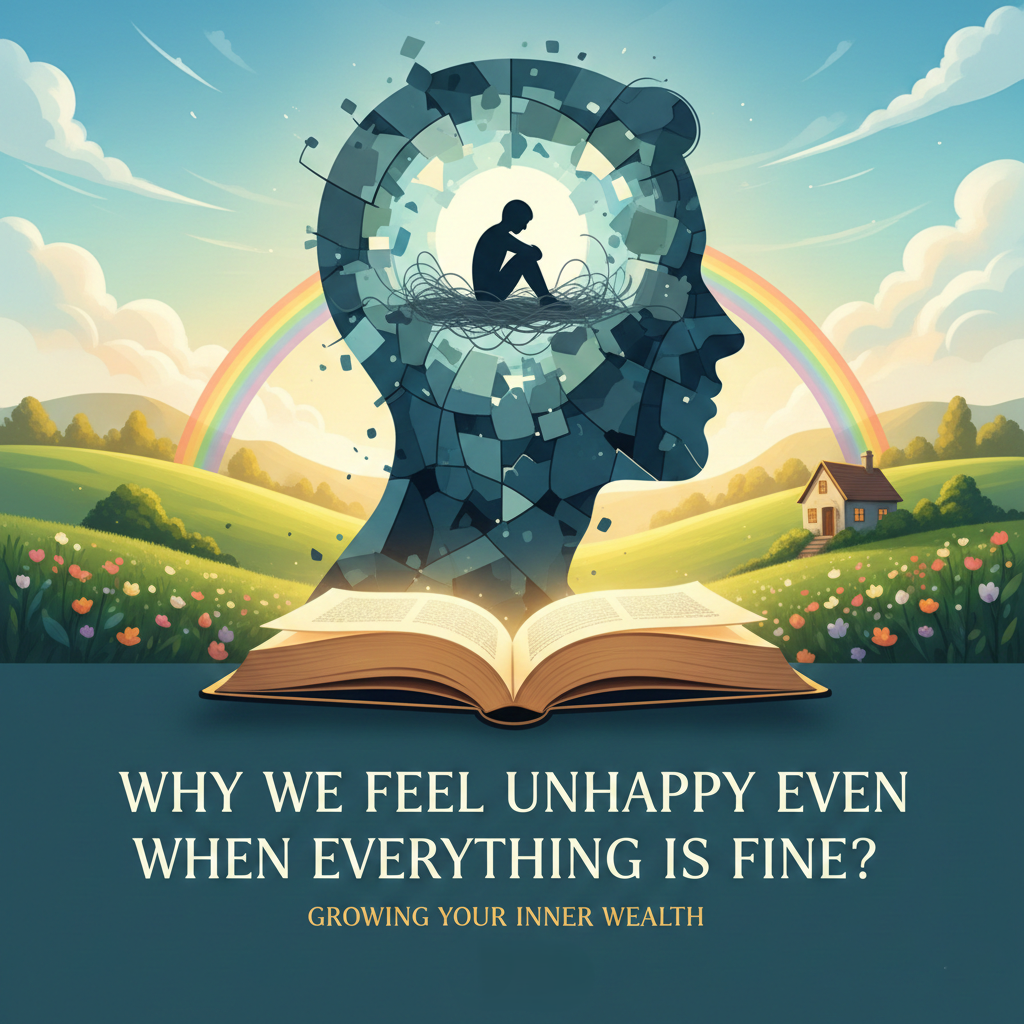
There’s a script many of us run without even noticing:
“I’ll relax once this project is over.”
“I’ll celebrate when the promotion comes.”
“I’ll be happy after I hit that number.”
On the surface, it sounds disciplined. Serious. Focused.
Underneath, it often does something else- it trains your mind to postpone joy, delay inner peace and only allow yourself to feel good when a scoreboard somewhere says you’ve “earned” it.
Over time, this often leads to burnout symptoms, emotional exhaustion and a persistent sense of feeling empty even when everything looks fine from the outside.
Many people describe it quietly: “I don’t know why, but I feel unhappy even when everything is fine.”
Why “I’ll celebrate later” quietly backfires
1. It turns the journey into a grind
When joy is only allowed at the finish line, the entire path becomes a tunnel of “not enough yet.”
Every day becomes a transaction:
“Did I do enough today to deserve feeling okay?”
“Can I rest? Have I earned it?”
This mindset keeps your nervous system in near-constant tension. You’re not just working hard — you’re living under emotional debt, constantly postponing happiness and inner calm.
Over time, this erodes emotional wellbeing.
Tired minds struggle to focus.
Tense bodies don’t recover.
And without a calm mind, even success feels heavy.
2. It teaches your brain that nothing is ever enough
When you finally reach the goal, something strange often happens:
The high is short.
The relief is bigger than the joy.
Very quickly, the mind asks, “What’s next?”
This isn’t a personal flaw. It’s conditioning.
The brain learns to:
ignore small wins,
normalise milestones instantly,
treat achievement as a brief pause between two rounds of pressure.
This is why people often ask:
“Why do I feel low every day?”
“Why am I still not happy?”
The hedonic treadmill keeps moving, and real satisfaction never lands.
3. It makes your identity depend only on outcomes
When pride is allowed only after winning, identity becomes outcome-dependent:
Good result → “I’m worth something.”
No result yet → “I’m behind.”
Missed result → “I’ve failed.”
In this state, effort, courage, learning, integrity — the foundations of inner strength — disappear from view.
People can be achieving and still feel disconnected from their life, wondering:
“Why don’t I feel like myself anymore?”
That’s a fragile place to live from. One setback, and the entire sense of self collapses.
Simple habits to be happier without losing ambition
This isn’t about giving up goals.
It’s about learning how to grow without sacrificing inner peace, mental health or purpose.
Below are small, practical practices for inner peace that support both growth and emotional resilience.
Micro-practice 1: The “today’s win” check-in (3 minutes)
At the end of the day, before your mind jumps to everything unfinished, ask:
“What are one or two things I did today that moved me forward — even slightly?”
This practice helps the brain register progress, not just pressure.
Over time, it supports emotional intelligence, self-awareness, and motivation.
Micro-practice 2: Pre-decide your mini-celebrations
Instead of vague promises like “I’ll be happy later,” decide in advance:
After a draft → coffee break
After consistency → personal time
After speaking up → quiet acknowledgement
These are not indulgences.
They are simple habits for emotional wellbeing that teach the nervous system that effort itself matters.
Micro-practice 3: One pocket of joy, on purpose
Each day, ask:
“Did I do one thing today just because it nourished me?”
A walk. Music. Silence. Tea.
Not productivity — presence.
This is how a calm mind is rebuilt.
Micro-practice 4: Define success in more than one line
Before a major goal, define success across four dimensions:
Outcome
Process
Learning
Inner state
This prevents achievement from coming at the cost of mental wellbeing and helps you stay aligned with your values.
Micro-practice 5: Practice “enough for today”
At a chosen time each evening, say:
“For today, this is enough.”
This simple ritual helps stop overthinking, supports emotional recovery, and reduces the quiet stress that follows people into sleep.
When success stops feeling empty
Joy delayed repeatedly stops feeling like joy.
Peace postponed rarely arrives.
When you learn to:
notice progress,
honour effort,
build presence into the process,
and allow small, real celebrations,
you’re not becoming less ambitious.
You’re learning how to be happier without burning out.
Goals matter.
But the person you are becoming matters more.
If you recognise yourself in this pattern- feeling successful yet emotionally drained, motivated yet disconnected- it’s rarely just one habit. Growing Your Inner Wealth explores patterns like overthinking, comparison, emotional exhaustion, and postponed joy and offers gentle, practical ways to rebuild inner peace, emotional strength and meaning in life.
If you’re looking for a calmer, more grounded way to grow then the book ‘Growing Your Inner Wealth‘ this is a good place to begin.